FIFO Workforce · 28 July 2026 · 4 min read
Five days of notice beats a 5am surprise: setting an attendance confirmation window
Most Australian awards require seven days notice when the employer changes the roster. When a worker cannot make their swing, the superintendent usually gets an hour. A confirmation window evens the deal.
Modern awards are strict about notice in one direction: change a published roster and many require seven days warning to the crew, with penalty rates if it is shorter. There is no award clause protecting the other direction. When a worker is not going to show, the site finds out whenever the site finds out, and too often that is the morning of the flight.
The fix is not a policy document. It is a setting: the attendance confirmation window. Here is how the week before a swing runs when one is in place.

Five days out: the question goes out
The superintendent has already chosen the window that suits the site: two, three or five days before commencement. At the chosen mark, every rostered worker gets a WhatsApp message asking one thing. Are you attending your swing? No app to install, no portal login, the channel the crew already reads at the airport and the kitchen table.
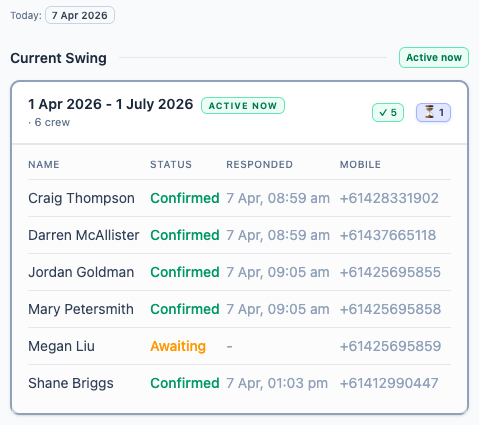
Three days out: the roster sorts itself into three lists
- Attending. Confirmed and closed. Most of the roster, most of the time.
- Unable to attend. The most valuable bad news on site, because it arrived while flights, swaps, and backfill were all still cheap.
- Yet to respond. Not an emergency, a signal. This is the follow-up list, and it is short.
The old way hands the superintendent one long list of names and one hope. The window hands over certainty on most of the roster and a specific, small list of phone calls to make with days in hand.
Two days out: absence becomes options
With real notice, a gap is a decision rather than a scramble. Ring someone not currently rostered on. Use the slot to trial a new contractor who has been more consistent, working alongside the crew rather than parachuted in mid-swing. Weigh a swap against overtime with a clear head. This is also where the culture piece pays off: attendance gets handled inside the team, by the person who knows the crew, instead of escalating into an organisational problem with HR, charter seats, and a production number attached.
Flight morning: the bus count matches the list
Not because nothing went wrong this week, but because everything that went wrong went wrong on Tuesday, when it was manageable.
Picking your window
Tight crews with steady rosters run well on two days. Long travel legs or a thin backfill bench want five. The point is that the superintendent decides once, and the roster enforces the decision every swing after that, without anyone having to remember.
What we see once a window is running
Two things stand out in the field. The follow-up list shrinks over the first few swings, because crews learn the rhythm the way they learn any prestart routine. And the declines arrive earlier than anyone expects, because replying no to a message days out is an easier act than ringing the boss the night before a flight. The window's real product is not the list itself. It is where the conversation about attendance happens: inside the crew, early, while it is still small.
Plan your next quarter on Data Informatics
Quarterly FIFO rosters, swing patterns, WhatsApp attendance confirmation, and backfill in one place. Free to start.
See plans →